
Thoughts on Taiwan’s 2020 Presidential Election
This article is originally published before the 2020 Presidential Election, and I've added some retro reflections at the end of the article.
- Hank
- 7 min read

English Version (中文版本在下方)
(This article was originally written before Taiwan’s 2020 presidential election. I have added retrospective reflections at the end.)
Preface
Politics should not be built on idol worship or doublethink. Decision-making driven only by emotion, fear, or vague intuition will never persuade people on the other side. Whatever the election result, those in power still have to govern a society that becomes deeply polarized every election cycle. The least everyone can do is listen more generously and keep talking to one another.
Parallel worlds do exist. There is no need to indulge in apocalyptic despair. What matters is understanding why those parallel worlds form in the first place. Below, I try to look at the issue from several angles. The analysis may not be data-heavy, but I have tried to write from as neutral a position as possible.
Main Text
If we want to understand parallel worlds in politics, we should begin with the economy. The reason is simple: economic performance is often the most direct benchmark people use to judge those in power.
At the level of macro numbers, the US-China trade war, record highs in the stock market, the return of Taiwanese capital, and strong interest from multinational firms in setting up operations in Taiwan all painted a picture of boom times. But these seemingly abundant fruits mostly benefited capital owners. Most ordinary people did not feel much improvement.
Even as the minimum wage rose and some daily necessities became easier to afford, the widening wealth gap generated resentment powerful enough to overshadow everything else. Technological progress has been reshaping the world with force comparable to the industrial revolution. Wealth has accumulated quickly, but the distribution of that wealth is far from fair. People do not need data to feel poorer. A sense of imbalance is enough, and the data merely confirms how wide the gap between different lived realities has become.
Returning to the election itself, Taiwan’s turn toward increasingly attention-driven campaign tactics should not have been surprising. Around the world, politics has moved toward conflict-heavy messaging, and Taiwan followed. Candidates and parties escalate rhetorical conflict at every rally and debate. The real question is whether we ourselves remain rational while being carried along by emotional高潮.
Put bluntly, language is often the cheapest pricing tool. Politicians use political language to reinforce partisan loyalty, segment the electorate, and maximize support by emotional price discrimination. In doing so, they squeeze the public’s surplus the way firms squeeze consumer surplus.
Politics turns simple economic examples into unsolvable riddles. Doublethink spreads constantly through social media. I do not mean to stand on some moral high ground. I am not a saint. But I do think people should be more rational about politics. Choosing based on policy domains such as technology, education, or diplomacy is still far better than stamping a ballot based purely on hatred or existential fear.
Of course, every candidate will present policy promises, and evaluating those promises requires background knowledge and serious analysis. The internet and media can help, assuming one can find sources that are reasonably fair. It takes effort, but for the highest-stakes multiple-choice question a citizen faces, that effort is justified.
The next issue is identity. National identity became one of the most visible points of conflict in this election, and its deepest roots lie in education. The so-called natural inclination of younger generations toward Taiwanese identity is closely tied to localized and multicultural perspectives in the curriculum. That makes the correlation between age and national identity much easier to understand.
Taiwanese identity and Chinese identity have never been mutually exclusive sets. A broad Chinese civilizational identity still exists among many older generations. There is not inherently a right or wrong side between a Taiwan-oriented position and a China-oriented one. What is clearly wrong is anything that violates the spirit of freedom and democracy, especially authoritarian violence.
The Chinese Communist Party is not the same thing as China. Being friendly toward China is not the same as supporting the CCP. Loving Taiwan is not the same as opposing China. Trying to erase Chinese identity entirely is both unrealistic and conceptually flawed. The “one China, different interpretations” framework in the 1992 Consensus is itself an expression of Chinese identity, while the split between blue and green camps shows how deeply divided national identity remains within the Republic of China on Taiwan.
The spirit of democracy is that the minority accepts majority rule and the majority respects the minority. That principle matters even more when identity itself does not divide neatly into majorities and minorities. Unification and independence are not fake issues. They are gradually evolving national positions. The stronger identification with China becomes, the more accepting people may become of the CCP. That is why public understanding of the difference between a nation and its government, and of the violence inherent in authoritarian regimes, must become a shared civic consensus.
Anyone who loves this land should understand, through rational and generous discussion, that the international situation is full of uncertainty. Rising challengers and established powers are competing for global influence. The clash between political systems reveals each side’s defects: the overreach and innovation-suppressing tendencies of authoritarian states, and the repetitive, performative, and sometimes self-righteous decision-making style of democracies. I do not claim one system is perfect, but one is clearly freer.
At this moment, Taiwan needs to make its orientation toward China and the United States legible to the world. In theory, the most opportunistic strategy in a great-power conflict is to please both sides and capture benefits from both, as the Soviet Union once did in a different context. But that only works when the balance of power is unclear and neither side is legally or materially an external hostile force. Under Taiwan’s current legal framing, the PRC-led Chinese state clearly counts as one, while the KMT’s interpretation of the 1992 Consensus makes the political line far harder to define cleanly.
Because this is such a sensitive moment, the stakes of the election are unusually high. The choice must be made more broadly and more carefully. Taiwan’s distorted two-party system needs balancing from a third force. While two-party politics may create stability in many countries, Taiwan does not map neatly onto a classic left-right split, so a multiparty system may be a worthwhile alternative. When choosing between two harms, choose the lesser one. Stay rational. Do not let hatred surround the world. Trust remains both the first and final assumption behind human society.
Postscript and Reflection
Looking back at something I wrote four years ago feels strange. At the time, the impulse came from a romantic concern about a society that seemed to be splitting apart. I had just entered university and still carried a lot of idealism and heat.
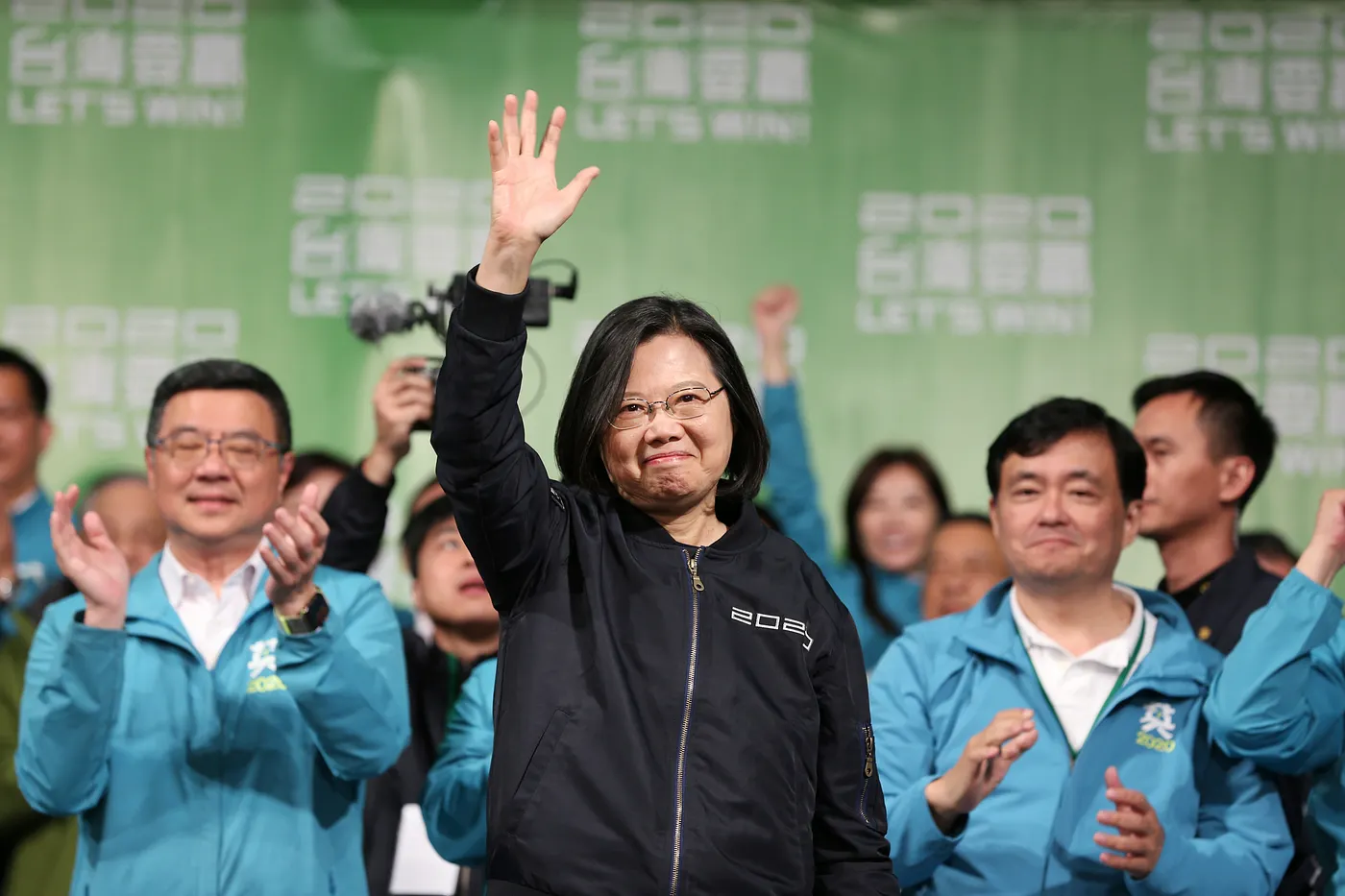
That election ultimately ended with Tsai Ing-wen of the Democratic Progressive Party winning reelection with a record-high 8.17 million votes. Taiwanese society did not continue along the path of division and shouting that I had feared. The election ended, and life went on.
Clearly, I underestimated the resilience of Taiwanese society and the stability produced by democracy. Four years later, when I participated in another presidential election, I was less anxious than the first time. I still cared deeply about the result, but my confidence in Taiwan’s society had grown. I knew that whatever the result, the country would return to equilibrium after a short period of turbulence.
The thing I remind myself of most often is this: as experience accumulates, do not lose the passion of youth. Do not become a walking shell. Keep improving. Keep caring about society. Keep caring about the country. And do not forget our school motto: integrity, diligence, patriotism, and compassion.
對於2020年總統大選的感想
中文版本
前言
政治不應該存在偶像崇拜和雙重思想,情緒性及訴諸感覺(恐懼)的決策模式無法說服任何相左立場的思想。不論此次選舉結果如何,執政者都需要面對一塊每經選舉便嚴重對立與分化的土地,任何人都應該盡量包容地傾聽與對話。
平行世界確實存在,任何人都不需要對此抱有荒謬的絕望感(亡國感),而是該了解它發生的緣由。以下用幾個面向稍微分析,也許欠缺數據資料但所有觀點皆盡量以中立角度書寫,若有謬誤歡迎討論指教。
正文
要談論平行世界,應先自經濟著手,原因很簡單,經濟往往是驗證執政成績最直接的指標。
數字層面,中美貿易戰造成的影響,台股屢創歷史新高,台商回流資金滿溢而出,多國企業對於來台設廠有高度興趣…關於景氣沸騰的新聞族繁不及倍載,但這些看似豐盛的果實皆是資本者的利多,多數民眾並無感觸。儘管最低薪資一再調高,日常商品的價格不斷下降,滿足最低限度的生活愈來愈容易,但日漸擴大的貧富差距所引起的妒忌怒火能輕易蓋過全部。科技進步正悄悄影響至世界各地,程度不亞於工業革命。財富的確累積迅速,但充滿效率的同時,其分配並不全然公平。感受到貧窮不需要數據佐證,單純不平衡心理便已足夠,數據也只是更加佐證兩個世界差異之大。-回歸選舉面,當全世界掀起各種吸引眼球優先的選舉策略,而台灣跟上此旋風也是早該預見的。候選人(或政黨)不斷升級的言論對立在每一場辯論會和造勢場合上演,捫心而論,隨著語言高潮迭起的自己是否理性?說白了,語言也只是最利薄的訂價工具,政治人物利用政治語言強化選民對於其的政黨忠誠,同時分化客群,利用多段式差異定價獲取最大利潤,榨乾人民的消費者剩餘。
經濟學上簡單的例子扯上政治便成了無解習題,雙重思想不斷在社群平台轉送,並不想站在道德制高點批評,我也不是與世無爭的聖人,只是對於政治,所有人都應該理性些,憑藉部分面向的政策做抉擇(科技、教育、外交)也好過於憑藉感覺與情緒的蓋印。(仇恨、亡國感)當然過程中會遇到許多候選人端出的政策牛肉,而政策的可行性便需要許多背景知識和專業分析,資訊蒐集大多可借助網路與媒體(假設中立)的幫助,只是可能花費龐大精力與時間,但對於最高層級的選擇題,花些功夫也是理所應當。-再來是認同面,國族認同已成本次選舉最為人矚目的爭論焦點,而國族認同最根本的形塑來自教育,所謂年輕人的天然獨也是奠基於教綱中若有似無強調的本土化和多元文化觀點,由此解釋國族認同之於年紀的高度相關便合理許多。
台灣人與中國人從來不是零集合,大中國觀念現今仍存在多數中高年齡者意識中,而中國派或台灣派也不存在對錯,存在對錯的是任何違反自由(民主)精神的事物(極權和暴力),中共並不等於中國,親中不等於親中共,愛台也不等於反中。徹底剷除中國認同是不切實際且充滿瑕疵的想法,九二共識的一中各表便是中國認同的展現,而現今藍綠各自擁護者也是台灣(中華民國)人民國族認同強烈分歧的證明。
民主精神便是少數服從多數,多數尊重少數,遑論完全沒有多少數之分的國族認同。統一與獨立確實非柯文哲所說的假議題,而是逐漸傾向的國家立場。當對中國的認同愈來愈強,人民對於中共接受度自然會提升,但認清國家與政府的差異以及極權政府的暴力才是最應該藉由多方溝通使全民熟知的群體共識且不容質疑。-用包容與理性討論以上論述,不會有任何一個愛這塊土地的人不明白,現今國際情勢詭譎,崛起挑戰者與舊有權力者爭奪整個世界的發語權,體制間的碰撞顯現出更多各自缺陷,極權政府過大的干預和損害的企業創新力,民主政治決策反覆的運作方式和維持秩序所偽裝的正氣凜然,我並不認為誰較好但明顯一方更為自由。
現今節骨眼需要明確向國際展示台灣人民對於中美雙方的好感度,最能瓜分衝突之下利益的做法當然是兩方討好(二戰的蘇聯),但此前提建立在衝突優勢不明顯以及任何一方非境外敵對勢力(就現今法律定義便是中共執政的中國政府,但國民黨由於一中各表的九二共識無法明確定義)。-由於此敏感時機,本次選舉結果格外重要因而做選擇時考慮的面向須更加廣泛且謹慎,扭曲的兩黨政治需要第三勢力制衡,儘管多數國家的兩黨政治焦味穩定,但在台灣不存在典型左右翼政黨,因此多黨制不失為一權衡下的選項。兩權相害取其輕,保持理性切記,別讓仇恨包圍世界,人性本善(信任)終究是世界運作最初也是最終的假設。
後記與反思
歷時四年後回顧當初自己寫的文章是另一種感受。當時起心動念的原因是對日漸分裂的社會抱有一絲浪漫的想像,甫上大學的年紀,對一切都懷抱著熱血與美好。
那年選舉最終的結果是,代表民進黨的蔡英文政府在總統大選獲得歷史新高的817萬,連任成功。台灣社會並沒有如我擔心的,持續著選前的分化和叫罵,選舉過完,日子照樣過。
很明顯地,我低估了台灣社會的韌性和民主之下的穩定。四年後,參與了第二次總統大選,我不如第一次那樣擔心。一樣心繫選舉結果,但我對台灣社會的信心與日俱增, 因此我知道無論結果為何,社會都會在短暫動盪後回到正軌。
時常提醒自己的,不外乎在積累漸長的歷練之下保有年輕的熱情,不要成為行屍走肉的靈魂,持續精進自己、關心社會、關心國家,不要忘記我們的校訓:「敦品、勵學、愛國、愛人」。
- Tags:
- Policy
- Reflection