First Steps in America
My first time in the United States. From LA's dusty mountains to Santa Monica's pink skies. From self-driving Cybertrucks to meaningful customer feedback. Reuniting with old friends abroad, finding purpose in work, and reflecting on Taiwan-US distance and turning thirty.
- Hank
- 6 min read
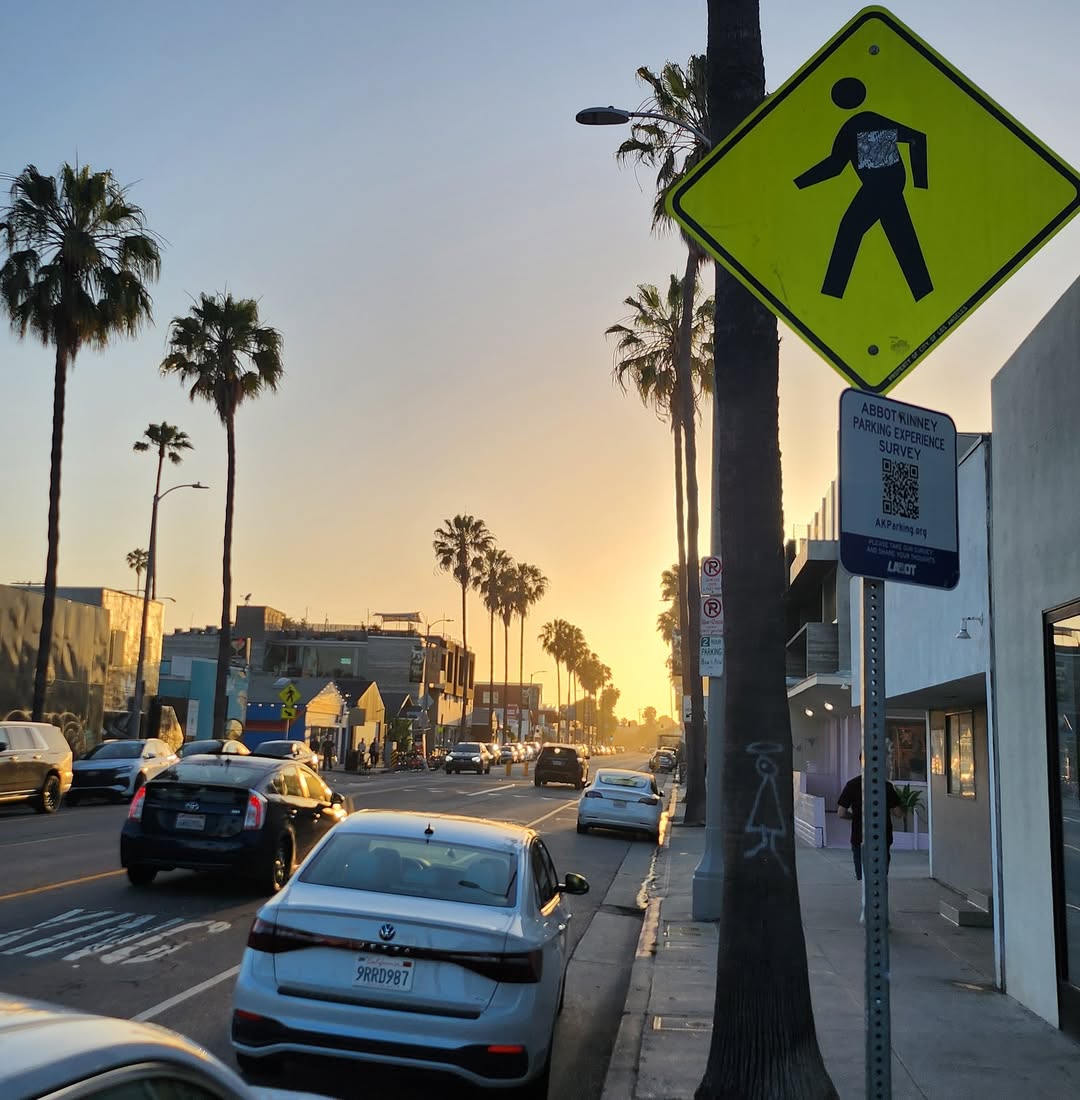
This was my first time setting foot in the United States. From the dry, dusty mountains around Los Angeles to the pink skies over Santa Monica. From riding in a self driving Cybertruck to hearing honest feedback from customers. Reuniting with old friends far from home. Finding meaning in work. And quietly wondering how far Taiwan really is from the US, and where I myself might be at thirty.
Even though I have seen and read about the US countless times through different channels, none of it compares to the feeling of actually being there. Stepping onto the land makes everything feel more real. At the same time, many of the fantasies also come back down to earth.
Some things are easy to imagine as endlessly beautiful. You can paint the sky pink, give every passerby a cheerful smile, and ignore reality entirely. Imagination does not need to deal with how things really are.
After more than ten hours on a plane, arriving in Los Angeles felt dry and bare. Yellow earth. Empty land. Mountains stretching across the distance. At the airport, staff and passengers spoke different languages. I could understand both. Signs were in English, but the people around me in line were speaking Chinese. For a moment, it felt like I had not left Taiwan at all.
The lines were split between US passport holders and everyone else. The crowd was almost cut in half. A large group of people with Taiwanese accents were guided into the other lane. I once joked with friends that maybe more than half of NTU students have relatives in the US. Looking around, that joke did not feel completely unreasonable. Sampling bias aside.
On the drive from the airport to the hotel, I paid close attention to the streets. Cars were larger. Pickup trucks, which are rare in Taiwan, were everywhere. Buildings were mostly one or two stories high. Commercial areas were organised into plazas, but each one was at least a ten minute drive apart. Everything felt spread out.
My first meal in the US was Chinese takeout with live NBA playoff games on TV. It felt strangely fitting for a Taiwanese person visiting America. I was surprised by how much I liked American style Chinese kung pao chicken. The rice, however, was too dry. Taiwanese rice is still better. Japanese rice is even better.
Over the next few days, I went to Santa Monica Beach and watched the ferris wheel under a pink sky from a distance. I rode in a colleague’s Cybertruck and was genuinely impressed by Tesla’s self driving system. I even had a meeting with my boss inside the car while no one was driving. For an hour long drive, no one touched the steering wheel. I opened my phone and bought more shares on the spot.
Eating out over the next few days felt surprisingly reasonable. I tried fast food, Korean, Thai, Japanese, and one very expensive Italian restaurant. Most casual meals in the US seemed to cost around ten to twenty dollars. In Taipei, eating out easily costs NTD$200 to NTD$300 anyway. Roughly double the price, but when you factor in salary differences, the US does not feel dramatically more expensive. And eating out is not really the default lifestyle there.
This trip also gave me a chance to see an old high school friend who is now working and studying in the US. I stayed over, ate for free, and spent the days wandering around. Venice Beach. USC’s campus. Watching games at sports bars. Trying Waymo. At night, staying in, getting high, watching the world spin, talking about the past when boredom hit.
It was genuinely nice to see friends doing well in their own fields. Having familiar faces scattered across different cities makes being abroad feel less lonely. Sometimes distance does not weaken connections. It strengthens them. It is good to see you there, my friends.
There was work too. The main purpose of this trip was to visit customers in person. To see how they actually use our product. How they talk about it. How they think. How they make decisions. Online meetings are convenient, and time zones aside, communication is rarely a problem. But something is missing without being face to face. There is a kind of chemistry that only exists in person.
Listening to customers sincerely describe how our software helped them over the years, how it solved problems they had struggled with for decades, gave work a real sense of weight and meaning. I cannot imagine feeling that same depth through any other channel.
After returning to Taiwan, I watched the newly released film A Chip Odyssey. It reminded me that Taiwan and the US are not as far apart as they seem. There are not many countries between Taiwan and the west coast of the US. The Pacific Ocean creates great physical distance, but the flow of people and culture brings the two places closer.
Taiwanese students studying in the US have always ranked near the top globally. There was even an old saying: 來來來來台大,去去去去美國. US news appears constantly in Taiwanese media. Taiwan’s modern development is deeply tied to US funding and technology transfer. How to make good use of this complex relationship has always been an important and difficult question.
The disadvantages of being born on a small island are well known. A small market. Limited land. Fewer resources. But the advantages are clear too. Bringing back cutting edge technology from abroad makes it easier to stand at the top. The world’s most advanced economies are right around us. The US. China. Japan. If we use these advantages well, maybe we really can create the next TSMC.
The film also showed how, when Taiwan first decided to develop semiconductors, the government sent a group of people in their thirties to the US to train at RCA. Today, every one of them is a pillar of Taiwan’s, and even the world’s, semiconductor industry.
It made me think about my own thirties, which are not far away. Will I be able to recognise the direction of the times, take hold of the right opportunities, and stay on the right path? Where will my thirty year old self be, and what will I be doing?
儘管從各種管道接觸美國的方方面面無數次,但都比不上踏上土地時的感受真實,當然也有許多幻想一併現實化,許多事情都是如此,從未有過的美好可以無限制的疊加,不需要考慮實際情況,可以在天空上畫上粉色光輝,在路上所有行人臉上畫上開朗笑臉,但那都不一定是真的。
坐了十幾小時的飛機前往洛杉磯,踏出機艙門的那一刻是黃土光禿禿一片和遠方山脈蔓延環繞,機場人員和機上乘客說著不同語言,而我兩者都算聽得懂,機場裡的告示是英文,但身邊排隊隊伍都用中文交流著,彷彿還沒離開過台灣。
隊伍被區分成美國護照與其他,所有乘客大概被一分為二,有將近一般操著台灣口音的人們通往了另一個通道,曾經和朋友打趣說到台大校園裡擁有美國親戚的人可能超過一半,現在看起來並不算太離譜的推測。(雖然存在取樣偏差)
接著從機場到飯店的路上好好觀察了路邊的街景,車子都比較大台,皮卡在台灣幾乎看不到幾輛但在美國非常普遍,樓都不超過兩三層,商業設施的基本單位是plaza,但彼此間的車程都至少十分鐘。
來美國的第一餐是中式快餐外帶配NBA季後賽live,蠻適合我這個來美國的台灣人,意外地很喜歡美式中餐宮保的口味,但白飯的口感太乾,還是台灣的米飯好吃。(日本的更好吃)
接下來的幾天去了Santa Monica海灘,遠遠的看了粉色天空下的摩天輪,坐在同事的 Cybertruck裡驚艷於特斯拉的自駕能力,甚至和老闆坐在車裡開會,一個小時的車程手沒有碰上方向盤一次,立馬打開手機加倉。
這幾天的外食覺得似乎普通餐廳的物價就比台北多一些,吃了速食、韓式、泰式、日式、和特別貴的義式餐廳,發現美國一般餐廳的價格大概落在10-20美金,而台北隨便吃其實也要200-300台幣,餐費開銷抓個兩倍差不多,但考量到薪資差異,似乎美國沒有貴多少,況且外食在美國也不是主流消費模式。
這次來美國也見了剛好在美國工作+讀書的高中同學,蹭吃蹭住,白天到處亂跑,去了Venice Beach南加大校園,在sports bar看球賽,體驗一下Waymo,晚上窩在家裡抽嗨,stoned之後看著世界旋轉,無聊就話當年。很開心看到朋友都各自在自己的領域發光,散布各個城市的友人總能讓人在異鄉不覺得那麼孤單,人與人的連結疊上地理間隔不一定是減弱反而可能是增強。It’s good to see you there, my friends.
玩樂之餘也是有工作,這次出差從主要目的是實地拜訪客戶,實際看他們怎麼使用我們產品,怎麼說,怎麼想,怎麼做。縱使現在線上會議非常方便,只要克服時差問題,實時聯絡和討論並不存在太多問題,但可能也就僅此而已,沒有面對面似乎就少了某種化學反應。
看到客戶真心訴說這些年來用我們的軟體幫了他們多少忙,怎麼解決困擾他們數十年的商業難題,這種感受工作被賦予意義的時刻很真切,我無法想像以其他方式感受到一樣的重量。
回台灣後剛好看了新上映的電影《造山者》,深刻感受到台灣與美國的距離並不如想像中遠,實際上台灣與美國西岸之間並沒有多少國家,一片太平洋在物理距離上將兩地隔得很遠,但人才和文化間的交流則把兩地拉得近了些。
台灣留美學生人數一直在世界上名列前茅,以前甚至有「來來來來台大,去去去去美國」的說法,台灣新聞媒體上最常出現的國家前幾名也一定有美國,台灣近代發展的軌跡也離不開美國金援和各種技術移轉,如何善用和美國千絲萬縷的關係一直都是重大且複雜的課題。
生在台灣這樣小小島國的劣勢大家已經聽了很多,市場太小、土地不大、資源不夠,但優勢也相對鮮明,只要能從國外帶回來最新技術,就容易成為頂尖,而世界上最先進的幾個經濟體都散布我們周圍,美國、中國、日本…善用與生俱來的優勢並放大,我們都期待著下一個台積電不是嗎?
從《造山者》裡也看到最一開始政府要發展半導體時,從台灣選了一批三十歲左右的年輕人送往美國RCA學習,現在這批人每個都是台灣乃至世界半導體產業的中流砥柱,也不禁讓我想到即將到來的三十歲,是否能把握大時代下的趨勢與機會,在正確的路途上奮鬥著?我的三十歲會在哪裡做些什麼呢?
- Tags:
- Travel
- Work
- Reflection
- Usa